Types of Solfege
There are different types of solfege, depending on how to handle note names, scale-degree names, and chromatic variations.
Movable-do / Fixed-do
Musicians need both an absolute (fixed-do) and a relative (movable-do) system for referring to pitches, so it is recommended to practice both ways if it is possible. However, a beginner may have to choose which one to learn first when starting to practice solfege. If your goal is to learn absolute pitch or improve your playing of an instrument, you might want to start with a fixed do. If your goal is to learn relative pitch, analyze music, or learn compositional theory, then you may want to start with a mobile do. Either way, mastery of both is desirable in order to become a good musician.
Movable-do
In the movable-do, scale-degree 1 is named "do" and each syllable corresponds to a scale degree.

Fixed-do
In fixed-do, note "C" is always named "Do" and each syllable corresponds to the name of a note regardless of the key.

Non-Chromatic / Chromatic Syllables
The chromatic syllables allow you to be more rigorously aware of the differences in pitch, but you can start with the non-chromatic syllables if you find them difficult.
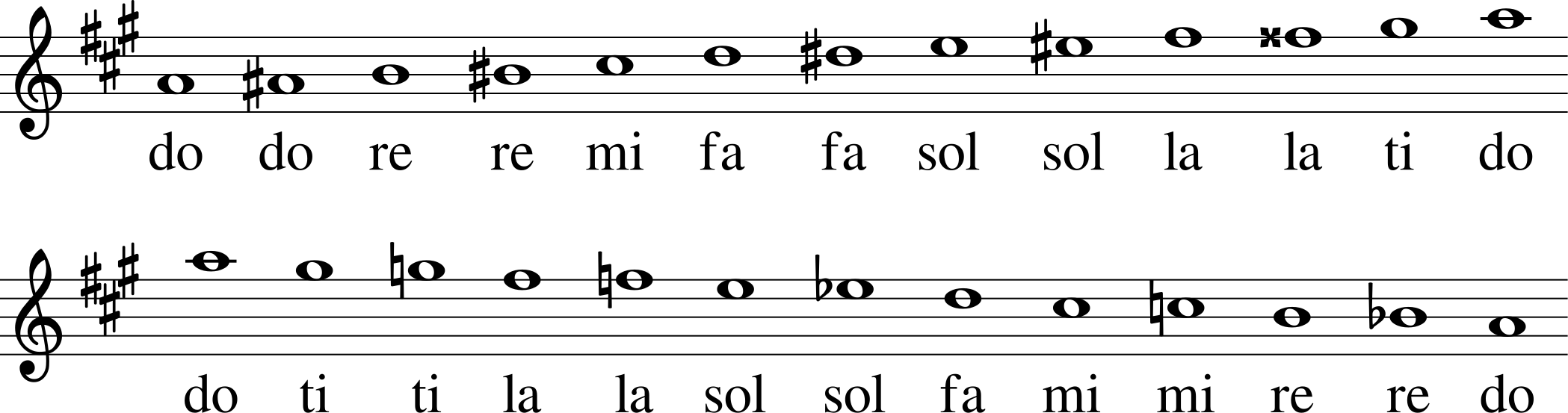
Non-chromatic Syllables (Movable-do)
Accidentals do not affect the non-chromatic syllables. Scale-degree 1 and sharp 1 are both named "Do".
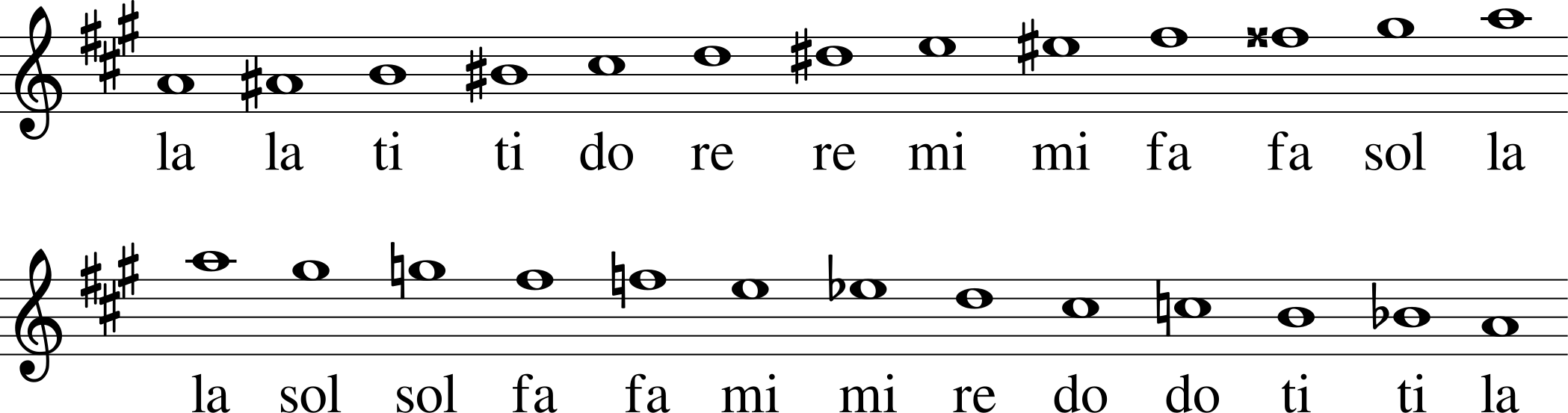
Non-chromatic Syllables (Fixed-do)
Key signatures and accidentals do not affect the non-chromatic syllables. "C" and "C#" are both named "Do".
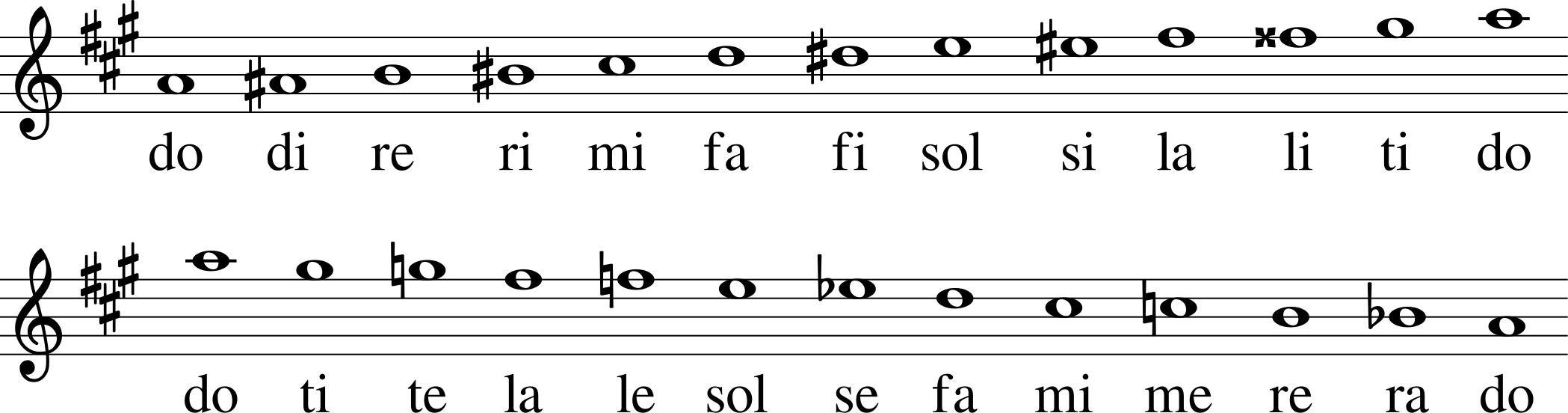
Chromatic Syllables (Movable-do)
Scale-degree 1 is named "Do" and sharp 1 is named "Di". Other syllables are shown below.
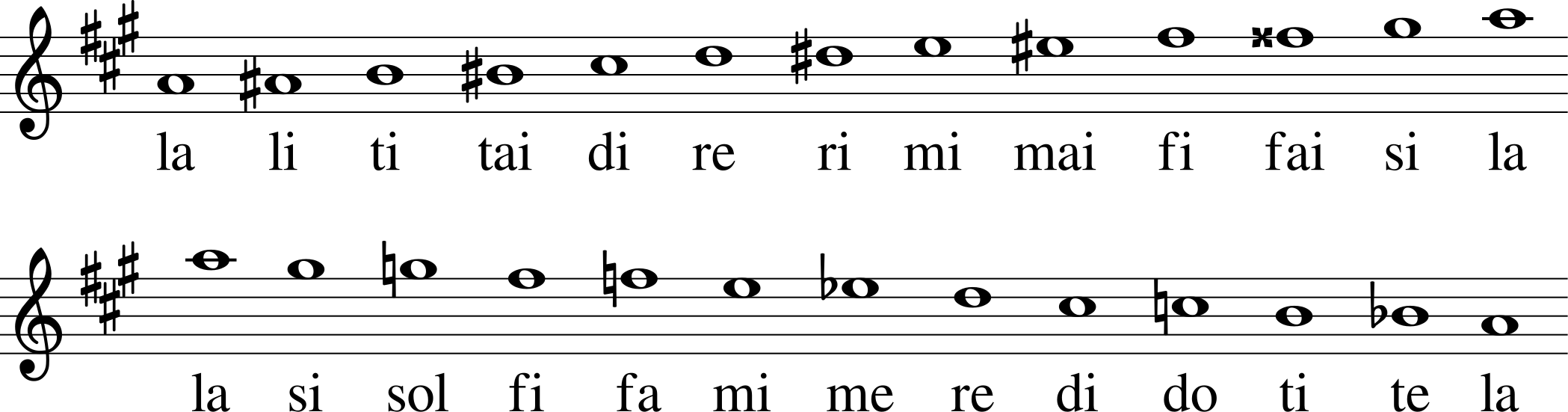
Chromatic Syllables (Fixed-do)
"C" is named "do" and "C#" is named "di" regardless of the key.
Chromatic Syllables (Summary Table)
The syllables of the chromatic scale are shown in the following table.
| Note name (Or scale degree in movable-do) | Syllable |
|---|---|
| C𝄫 (or double lowered 1) | daw |
| C♭ (or lowered 1) | de |
| C (or 1) | do |
| C# (or raised 1) | di |
| C𝄪 (or double raised 1) | dai |
| D𝄫 (or double lowered 2) | raw |
| D♭ (or lowered 2) | ra |
| D (or 2) | re |
| D# (or raised 2) | ri |
| D𝄪 (or double raised 2) | rai |
| E𝄫 (or double lowered 3) | maw |
| E♭ (or lowered 3) | me |
| E (or 3) | mi |
| E# (or raised 3) | mai |
| E𝄪 (or double raised 3) | - |
| F𝄫 (or double lowered 4) | faw |
| F♭ (or lowered 4) | fe |
| F (or 4) | fa |
| F# (or raised 4) | fi |
| F𝄪 (or double raised 4) | fai |
| G𝄫 (or double lowered 5) | saw |
| G♭ (or lowered 5) | se |
| G (or 5) | sol |
| G# (or raised 5) | si |
| G𝄪 (or double raised 5) | sai |
| A𝄫 (or double lowered 6) | law |
| A♭ (or lowered 6) | le |
| A (or 6) | la |
| A# (or raised 6) | li |
| A𝄪 (or double raised 6) | lai |
| B𝄫 (or double lowered 7) | taw |
| B♭ (or lowered 7) | te |
| B (or 7) | ti |
| B# (or raised 7) | tai |
| B𝄪 (or double raised 7) | - |
Skills Developed
Movable-do and fixed-do develop different musical abilities.
Skills Developed by Movable-do
- Relative pitch — the ability to recognize intervals and note relationships regardless of key
- Transposition — the ability to sing or play a melody in any key
- Structural understanding — grasping harmonic progressions and melodic movement in terms of tonal function
Skills Developed by Fixed-do
- Absolute pitch memory — directly associating note names with actual pitches
- Instrument operation — note names correspond directly to fingerings and key positions, making it practical for performance
- Atonal music reading — accurately reading modern music that lacks a tonal center
"Operation" and "Perception" — Two Perspectives
Music scholar Dr. Jody Nagel frames the difference between fixed-do and movable-do in terms of "operation" and "perception."
When playing an instrument (operating it), you need absolute note names — "this note is C#, so I use this fingering." When listening to and understanding music (perceiving it), relative relationships matter — "this note is a major third above the tonic."
In other words, fixed-do suits "operation" and movable-do suits "perception." Accomplished musicians possess both abilities, so the question is not which system is better, but how to use each one effectively.
Which Should You Learn First?
If you start in C major, movable-do and fixed-do are exactly the same. Regardless of which system you choose, the first step is identical.
In general, starting with movable-do is recommended. It aligns with how humans naturally hear melody — we recognize a tune as "the same song" even when transposed to a different key. As you gain confidence, you can add chromatic syllables, and eventually explore fixed-do as well. This step-by-step approach is effective.
However, in countries where do-re-mi are used as note names — such as France, Italy, Spain, Japan, and Korea — fixed-do is the natural starting point. In these countries "do" always means "C," so care is needed to avoid confusion with the movable-do concept.
Why Use Chromatic Syllables?
With non-chromatic syllables (do re mi fa sol la ti), both C and C# are called "do." Chromatic syllables distinguish them — C is "do" and C# is "di" — allowing you to vocally express chromatic alterations.
Beginners may find the extra syllables challenging at first. It is best to build a solid foundation with non-chromatic syllables, then move on to chromatic syllables when you feel ready.
Additionally, in keys with many sharps or flats (such as F# major), the fixed-do + chromatic combination results in nearly every syllable being an altered form, making it impractical to use.
Try It in Singalong Solfege
Singalong Solfege supports all four combinations: movable-do, fixed-do, non-chromatic, and chromatic. Simply switch settings to try different approaches — perfect for finding what works for you or stepping up gradually.